
Home/News/News
News 2026-04-07 7 min

1 May 2026: what concretely changes with the provisional application of the iTA

Alessandro Brenci

Attorney at law, international trade law expert

1 May 2026: what concretely changes with the provisional application of the iTA
Share

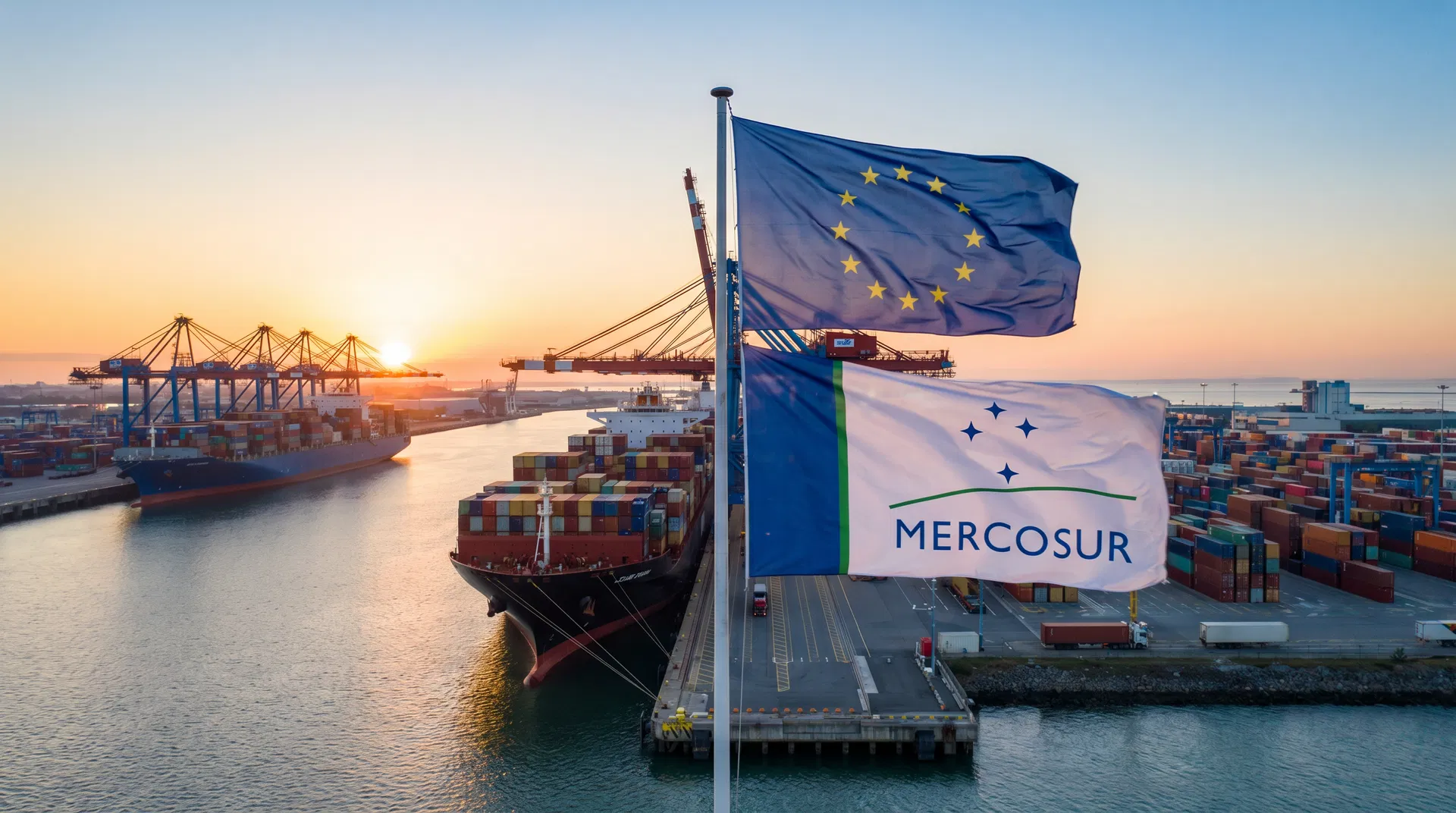
May 1, 2026: What Concretely Changes with the Provisional Application of the iTA\n\n### Introduction: The Day After Has Arrived\n\nAfter more than twenty years of negotiations, May 1, 2026 marks a historic date: the entry into provisional application of the interim Trade Agreement (iTA) between the European Union and MERCOSUR. Far from the grand political speeches, this date has very concrete and immediate implications for companies on both sides of the Atlantic. Which customs duties are disappearing or decreasing as of today? Which customs procedures are being modified? What must companies do, urgently, so as not to miss the train of this new commercial era? This guide is intended as a practical vade mecum to understand what is concretely changing and to act without delay.\n\n### Immediate Tariff Reductions: The Sectors Concerned from Day One\n\nAs of May 1, 2026, a significant portion of customs duties are eliminated or reduced. This is not all the gains of the agreement, which will be spread over 15 years, but a substantial first wave.\n\n**For EU exporters to MERCOSUR:**\n\n* **Wines (NCM 2204)**: Brazilian customs duties of 27% are reduced to 20% immediately. For Argentina, they go from 20% to 15%.\n* **Chocolate (NCM 1806)**: The 20% duties in Brazil and Argentina are reduced to 10%.\n* **Certain machines (Chapter 84)**: Many machine tools and machine parts see their 14-18% duties in Brazil halved, dropping to 7-9%.\n* **Chemicals (Chapters 28-29)**: A wide range of chemicals benefit from an immediate elimination of duties (from 8-14% to 0%).\n* **Cars (NCM 8703)**: The 35% duty in Brazil is reduced to 25% for a quota of 50,000 vehicles per year.\n\n**For MERCOSUR exporters to the EU:**\n\n* **Brazilian orange juice**: The 12.2% duties are eliminated.\n* **Soluble coffee**: The 9% duties are eliminated.\n* **Ethanol**: A quota of 650,000 tons per year is opened with a zero duty.\n* **Footwear**: EU duties (up to 17%) are significantly reduced.\n* **Fishery products**: Most duties are eliminated.\n\nIt is crucial for each company to check the tariff code (NCM/HS) of its product to know the exact reduction schedule applicable to it.\n\n### Changes in Customs Procedures: Simplification in Sight\n\nBeyond tariffs, the iTA aims to simplify the lives of operators. Here are the key changes effective as of May 1:\n\n1. **Proof of origin**: To benefit from preferential tariffs, exporters must prove the origin of their products. The EUR.1 certificate remains valid, but the REX (Registered Exporter) system is strongly encouraged. Companies that are not yet registered as REX must do so urgently to be able to issue their own statements on origin on their invoices, a major administrative simplification.\n2. **Transparency**: Both parties undertake to publish all their customs and trade regulations online, which should reduce legal uncertainty.\n3. **Authorized Economic Operators (AEO)**: The agreement provides for future mutual recognition of AEO programs. Companies certified as AEO in the EU or MERCOSUR will eventually benefit from faster and less frequent customs controls.\n\n### Checklist: What Companies Must Do NOW\n\nThe entry into force is immediate. There is no more time to lose. Here is a checklist of urgent actions:\n\n* **[ ] Check your tariff codes (NCM/HS)**: Confirm the classification of all your exported or imported products.\n* **[ ] Consult the tariff reduction schedule**: Identify the new customs duty applicable to your product as of May 1 and for the coming years. Use the European Commission's Access2Markets tool.\n* **[ ] Analyze the rules of origin**: Make sure your products are eligible for preferential treatment. Map your supply chain to prove origin.\n* **[ ] Register as a Registered Exporter (REX)**: If not already done, contact your national customs authorities to obtain your REX number. This is the key to simplified origin certification.\n* **[ ] Update your IT and invoicing systems**: Your systems must be able to integrate the new tariffs and issue invoices with the REX statement on origin.\n* **[ ] Train your sales and logistics teams**: Make sure your teams understand the new rules and know how to apply them to avoid costly mistakes.\n* **[ ] Dialogue with your partners**: Contact your customers or suppliers on the other side of the Atlantic. Coordinate on documentation and procedures. Make sure your Brazilian importer is properly registered on the RADAR/Siscomex system.\n* **[ ] Review your pricing strategy**: The drop in customs duties may allow you to lower your prices to gain market share, or to increase your margins. A strategic decision to be made quickly.\n* **[ ] (For the products concerned) Implement EUDR due diligence**: If you import coffee, cocoa, soybeans, beef, etc., from Brazil, compliance with the deforestation regulation is a prerequisite. The savings from the iTA will be useless if your products are blocked for EUDR non-compliance.\n\n### Conclusion: An Opportunity to Be Seized Immediately\n\nMay 1, 2026 is not an end, but a starting point. The provisional application of the EU-MERCOSUR iTA opens up considerable trade opportunities, but they will only materialize for companies that are prepared, agile, and rigorous. The changes are concrete and immediate. The companies that have followed the checklist above and anticipated these changes will be the big winners of this new transatlantic trade era. The train is moving, it's time to get on board.

Working on a concrete case?

20 minutes to identify three opportunities and three risks related to your situation.

Confidential first exchange →

Related tool

Preparation checklist

Access

Receive our analyses directly in your inbox

Join professionals who follow MERCOSUR news. 1 email per week, unsubscribe in 1 click.

Comments (0)

Leave a comment

Your email will not be published. Comments are moderated.

The Monthly Corridor Briefing

Regulatory monitoring, case analyses and legal insights — directly in your inbox, once a month.

Bonus: receive the PDF guide '10 steps to prepare your business for the EU-MERCOSUR agreement'

No spam. One-click unsubscribe. Data protected (GDPR/nFADP). · Monthly publication