News2026-02-20
Date: March 15, 2026 | Category: News | Reading Time: 8 min
January 17, 2026, will be remembered as a landmark date in the history of international trade. After more than two decades of painstaking negotiations, the European Union and MERCOSUR (comprising Argentina, Brazil, Paraguay, and Uruguay) officially signed their landmark Association Agreement in Asunción, Paraguay. The ceremony, attended by high-level dignitaries from both blocs, including European Commission President Ursula von der Leyen and European Council President António Costa, marks the dawn of a new era for intercontinental trade relations. The agreement is set to create one of the world's largest free-trade areas, encompassing nearly 800 million consumers and accounting for approximately 20% of global GDP. For businesses in the EU and EFTA, this signing is far more than a symbolic gesture; it signals profound changes, new challenges, and, most importantly, significant opportunities to be seized.
The primary objective of the agreement is to boost trade by systematically dismantling commercial barriers. The cornerstone of this initiative is the gradual elimination of customs duties. Under the terms of the deal, MERCOSUR has committed to liberalizing 91% of its imports from the EU over a transition period of up to 15 years for the most sensitive products. In a reciprocal move, the European Union will eliminate tariffs on 92% of goods imported from MERCOSUR.
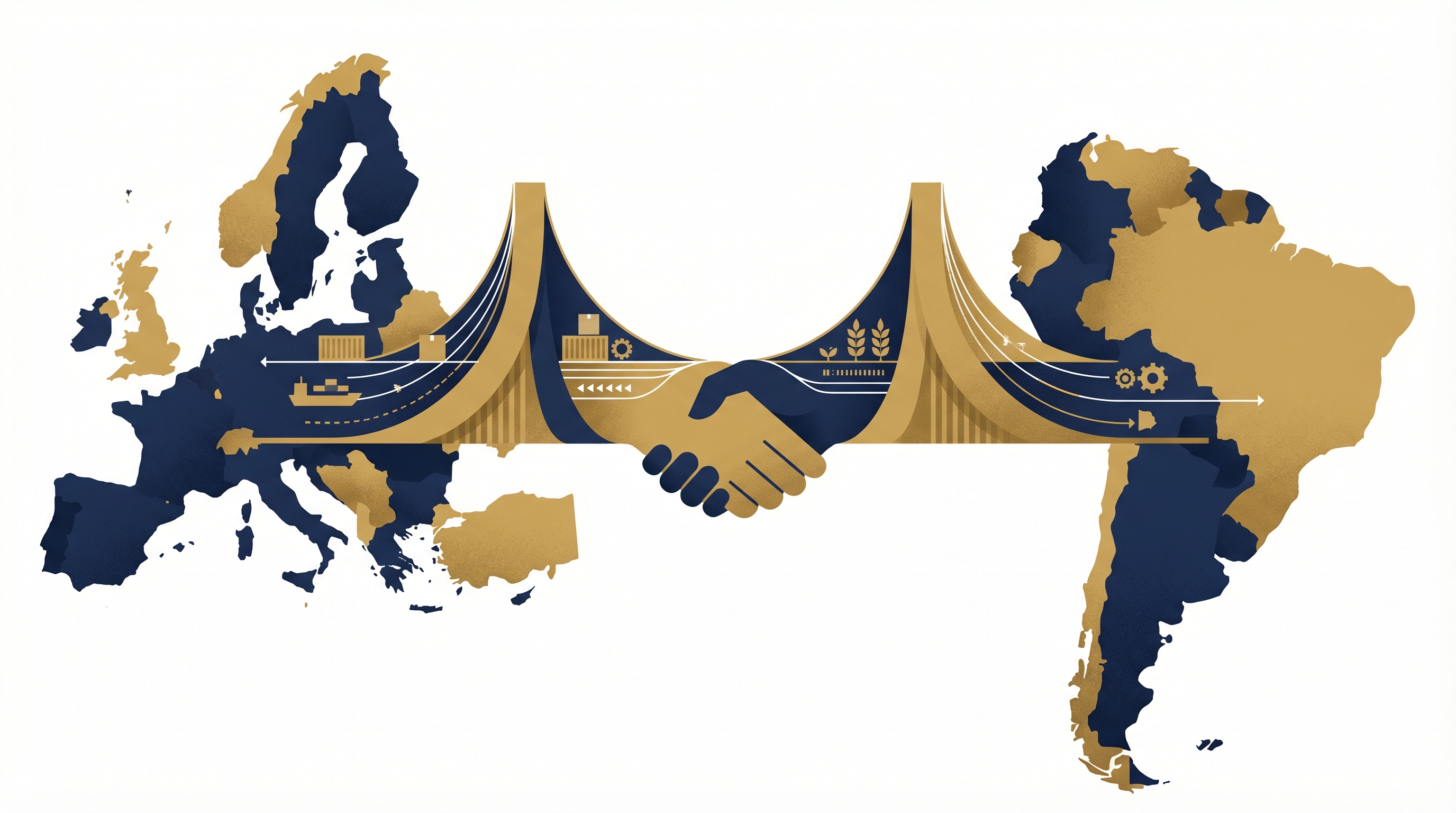
This tariff liberalization is designed to be asymmetrical, acknowledging the developmental differences between the two economic blocs. Industrial goods are set to benefit from the most rapid tariff reductions. For instance, key sectors such as automotive, machinery, chemicals, and pharmaceuticals will see their customs duties—which can currently be as high as 35% in Brazil—progressively phased out. For European companies, this translates into significantly improved market access and a stronger competitive edge against rivals from other parts of the world.
"This historic agreement represents an unprecedented opportunity to strengthen our economic ties and promote sustainable growth. It will offer new and significant trade opportunities for companies across the EU, boosting an estimated 39% increase in EU exports to MERCOSUR." - European Commission Statement, January 17, 2026.
The signing on January 17, 2026, is merely the first step in a longer journey. For the agreement to enter fully into force, it must now be ratified by the parliaments of all EU member states, the European Parliament, and the national congresses of the MERCOSUR countries. This ratification process can be lengthy and complex, subject to the internal political debates of each nation.
However, to expedite the economic benefits, negotiators have included an Interim Trade Agreement (iTA). This separate agreement could allow for the provisional application of the trade-related parts of the main agreement while the full ratification process is completed. The iTA could come into effect within 18 to 24 months of the signing, pending approval from the relevant bodies. Businesses must therefore begin preparing for these changes now, as the first tariff cuts could be implemented sooner than many anticipate.
The agreement's impact will vary across sectors, but several European industries are particularly well-positioned to reap substantial benefits.
Despite the clear opportunities, businesses will need to navigate a new and complex regulatory landscape. The Rules of Origin will be a critical element to master in order to benefit from the preferential tariffs. Companies will have to provide proof that their products are indeed "originating" in the EU according to the criteria defined in the agreement. Furthermore, the agreement includes chapters on sustainable development, labor rights, and environmental protection, which will impose new standards that must be met.
The signing of the EU-MERCOSUR agreement is a powerful signal for businesses in the EU and EFTA. The time to act is now.
* Analyze Your Value Chain: Assess how the reduction in tariffs could impact your import costs and sales prices. Identify opportunities to integrate new suppliers from MERCOSUR. * Study the Rules of Origin: Begin familiarizing yourself with the agreement's criteria now to ensure your products will qualify for tariff benefits. * Strategic Monitoring: Keep a close watch on the ratification process and the potential entry into force of the Interim Trade Agreement. * Plan Your Market Entry: For SMEs not yet exporting to MERCOSUR, this is the perfect time to develop an export strategy, taking advantage of the new access conditions.
This agreement is not just a diplomatic formality; it is a profound transformation of the trade landscape. The companies that prepare for it today will be the big winners of tomorrow.
For a personalized analysis of your situation, do not hesitate to contact us. The first consultation is free and without obligation.
Related tool
View agreement details
Join professionals who follow MERCOSUR news. 1 email per week, unsubscribe in 1 click.
Receive our regulatory monitoring and exclusive analyses directly in your inbox.
This website uses cookies strictly necessary for the operation of the service (session, language preferences, secure payment). No advertising or profiling cookies are used. In accordance with the nFADP (SR 235.1) and the GDPR (EU 2016/679), you may accept or decline optional cookies. Learn more