Home/News/Analysis
Analysis 2026-04-05 9 min

CBAM and MERCOSUR: why the Brazilian carbon price deduction is a legal mirage

Alessandro Brenci

Attorney at law, international trade law expert

CBAM and MERCOSUR: why the Brazilian carbon price deduction is a legal mirage
Share

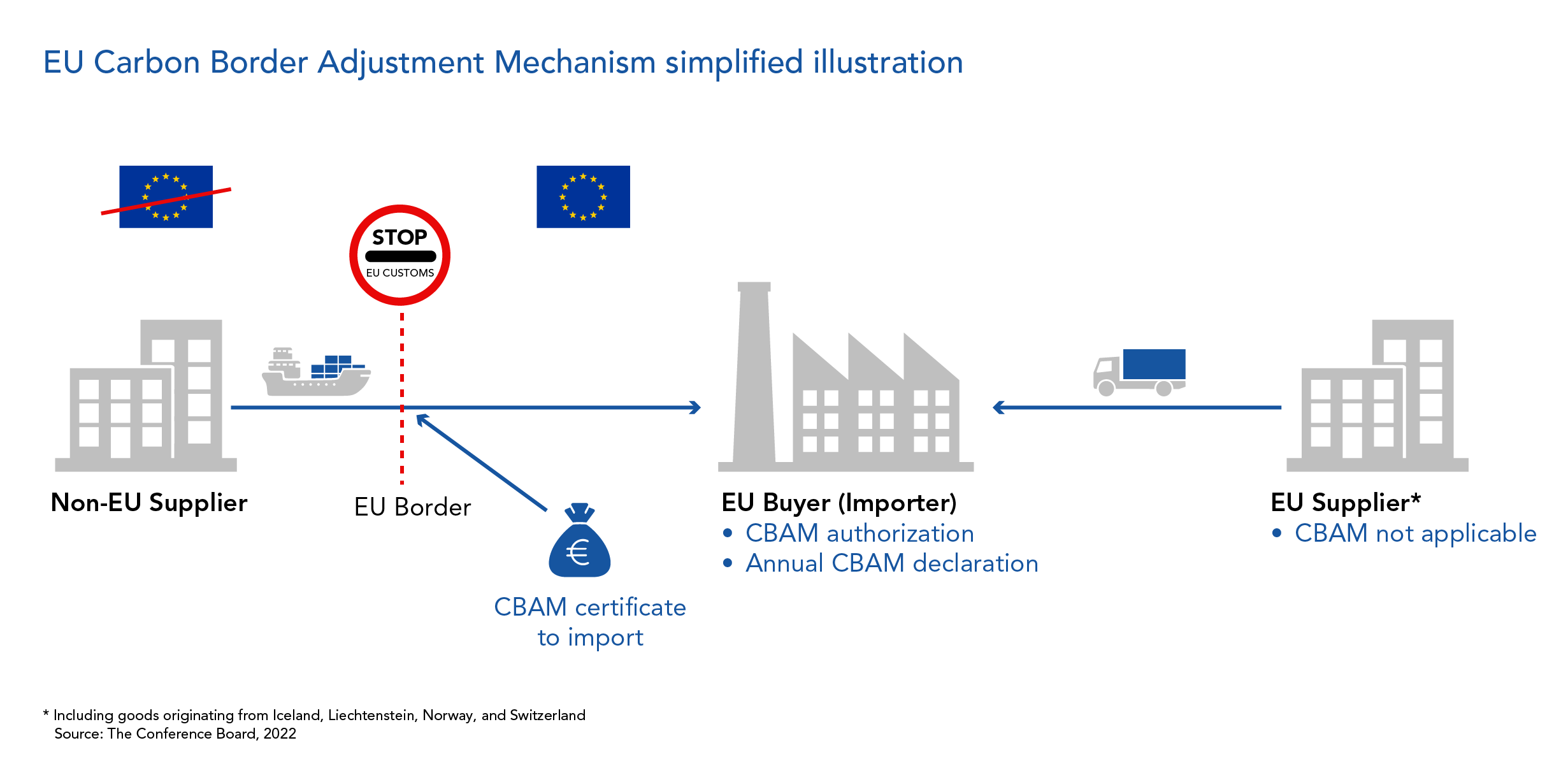
CBAM and MERCOSUR: the Carbon Border Adjustment Mechanism, a challenge for exporters\n\nThe Carbon Border Adjustment Mechanism (CBAM) is a flagship initiative of the European Union as part of its Green Deal. It entered its transitional phase in October 2023 and aims to prevent "environmental dumping" by subjecting imported products to a carbon price equivalent to that applied to European producers. For the MERCOSUR countries, which are major exporters of raw materials to the EU, the CBAM represents a major challenge that requires a rapid adaptation of their industries.\n\n### What is the CBAM?\n\nThe CBAM is a tool designed to combat "carbon leakage", i.e. the relocation of carbon-intensive industries to countries with less stringent climate policies. It works by requiring importers of certain products into the EU to purchase CBAM certificates to cover the greenhouse gas (GHG) emissions embedded in these products.\n\nThe price of the certificates will be aligned with the price of carbon allowances in the EU Emissions Trading System (EU ETS). The mechanism will be phased in and will come into full force on 1 January 2026.\n\n### The products concerned\n\nIn its initial phase, the CBAM applies to a limited number of carbon-intensive products:\n\n* **Steel**\n* **Aluminium**\n* **Cement**\n* **Fertilisers**\n* **Electricity**\n* **Hydrogen**\n\nThis list will likely be extended to other products in the future.\n\n### The impact on MERCOSUR exports\n\nThe MERCOSUR countries, particularly Brazil and Argentina, are major exporters to the EU of the products covered by the CBAM. Brazil, for example, is a major producer of steel and aluminium. The CBAM will therefore have a direct impact on the competitiveness of these exports.\n\nMERCOSUR exporters will face several challenges:\n\n* **The cost of compliance:** The cost of CBAM certificates will increase the final price of products exported to the EU, which could reduce their competitiveness compared to European products or those from countries with a carbon price similar to that of the EU.\n* **Administrative complexity:** Exporters will have to set up monitoring, reporting and verification (MRV) systems for their GHG emissions, which represents a significant administrative burden.\n* **Uncertainty:** The future evolution of the CBAM, including the extension of the list of products and the increase in the price of carbon, creates uncertainty for investors.\n\n### Compliance obligations and timetable\n\nThe implementation of the CBAM is taking place in two phases:\n\n1. **Transitional phase (1 October 2023 - 31 December 2025):** During this period, EU importers must declare the GHG emissions embedded in imported products, but without having to purchase certificates. The objective is to collect data and allow companies to adapt to the new system.\n\n2. **Definitive phase (from 1 January 2026):** From this date, importers will have to purchase and surrender CBAM certificates corresponding to the emissions of their imports.\n\n### Key takeaways for MERCOSUR exporters\n\n* **Measure your carbon footprint:** It is essential for exporters to accurately measure the carbon footprint of their products to anticipate the cost of the CBAM.\n* **Invest in decarbonisation:** To remain competitive, MERCOSUR producers will have to invest in cleaner production technologies and processes to reduce their GHG emissions.\n* **Dialogue with the EU:** MERCOSUR governments and industries must continue to dialogue with the EU to ensure that the implementation of the CBAM is fair and equitable, and to explore opportunities for cooperation on decarbonisation.\n* **Explore market diversification:** Exporters could also seek to diversify their markets to reduce their dependence on the EU.\n\nThe CBAM is a clear signal that the EU is serious about achieving its climate goals and encouraging its trading partners to do the same. For MERCOSUR exporters, it is a challenge that must be transformed into an opportunity to accelerate their own transition to a low-carbon economy.

Working on a concrete case?

20 minutes to identify three opportunities and three risks related to your situation.

Confidential first exchange →

Related tool

CBAM calendar

Access

Receive our analyses directly in your inbox

Join professionals who follow MERCOSUR news. 1 email per week, unsubscribe in 1 click.

Comments (0)

Leave a comment

Your email will not be published. Comments are moderated.

The Monthly Corridor Briefing

Regulatory monitoring, case analyses and legal insights — directly in your inbox, once a month.

Bonus: receive the PDF guide '10 steps to prepare your business for the EU-MERCOSUR agreement'

No spam. One-click unsubscribe. Data protected (GDPR/nFADP). · Monthly publication