
Analysis2026-04-20
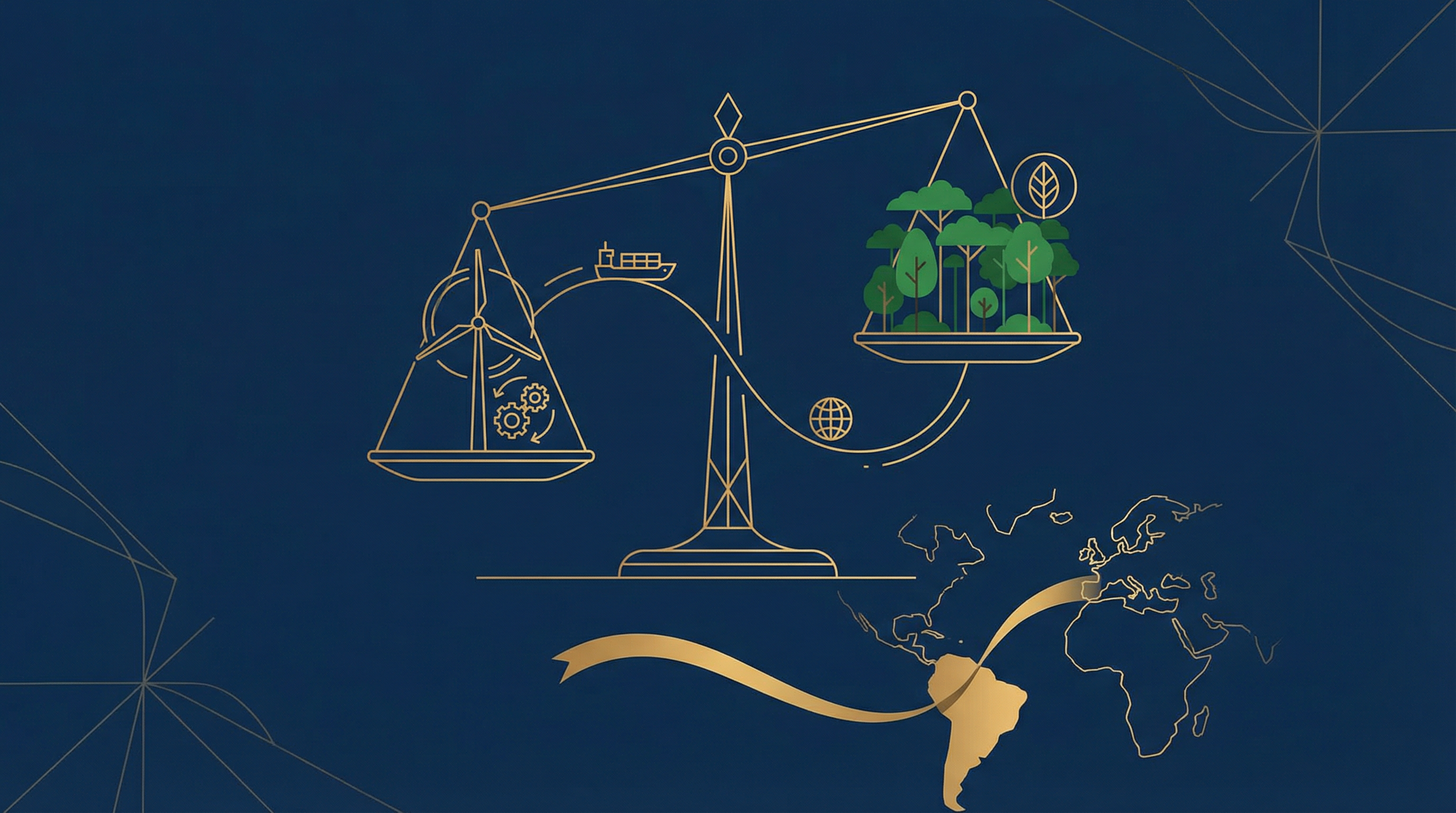
The trade agreement between the European Union and MERCOSUR is one of the most ambitious ever negotiated, not only in its economic scope but also in its commitments to sustainable development. For the first time, an entire and binding chapter on Trade and Sustainable Development (TSD) is integrated into the heart of a trade agreement of this magnitude. This chapter aims to ensure that trade liberalization does not come at the expense of the environment or social rights, but rather contributes to shared sustainability goals.
This article provides an in-depth analysis of the agreement's environmental commitments, particularly concerning the Paris Agreement on climate, the fight against deforestation, labor standards, and the monitoring mechanisms planned to ensure their implementation.
The TSD chapter is the cornerstone of the agreement's sustainability ambitions. It establishes a framework for cooperation and dialogue and sets out clear commitments for both parties. Unlike traditional trade chapters, its goal is not to dismantle barriers but to ensure that trade supports high standards.

The fundamental principles of the chapter include:
* The right to regulate: Both parties retain the right to define their own levels of environmental and social protection. The agreement aims to encourage upward convergence, not to harmonize standards to a lowest common denominator. * Non-regression: The parties commit not to weaken their environmental or social legislation to attract trade or investment. This is an essential guarantee against environmental or social "dumping." * Effective implementation: The parties commit to effectively implementing their own environmental and labor laws, as well as the international conventions they have ratified.
This chapter transforms the trade relationship into a broader partnership, where sustainability issues are considered central elements of economic cooperation, not secondary concerns.
One of the most innovative and debated provisions of the agreement is the explicit reference to the Paris Agreement on climate. The EU-MERCOSUR agreement states that combating climate change is a common objective and that both parties commit to effectively implementing the Paris Agreement. This commitment is considered an "essential element" of the overall agreement, on par with clauses on human rights and non-proliferation.
This has significant legal implications. In theory, a substantial violation of the Paris Agreement by one party (e.g., a formal withdrawal or a flagrant failure to meet its nationally determined contributions - NDCs) could allow the other party to suspend all or part of the trade agreement. This is a powerful political and diplomatic lever, although its use is a measure of last resort.
Deforestation, particularly in the Amazon, was the most publicized point of friction during the negotiations. The agreement addresses it with several specific commitments:
The TSD chapter is not limited to the environment. It also contains strong commitments on labor rights, based on the fundamental conventions of the International Labour Organization (ILO). The parties commit to respecting and promoting principles such as freedom of association, the right to collective bargaining, the elimination of forced and child labor, and non-discrimination in employment.
A crucial aspect of the chapter is the role it gives to civil society. The agreement establishes "Domestic Advisory Groups" (DAGs) on each side, composed of environmental NGOs, trade unions, and business organizations. These groups are tasked with monitoring the implementation of the chapter and advising governments. A joint civil society forum is also planned to allow for direct dialogue between stakeholders from both regions.
This is where the EU-MERCOSUR agreement innovates but also attracts criticism. If a disagreement arises regarding the application of the TSD chapter, it is not subject to the same dispute settlement mechanism as classic trade disputes, which can lead to trade sanctions.
Instead, a specific three-step mechanism is provided:
Critics point to the lack of trade sanctions at the end of this process, calling it "toothless." However, proponents of the approach argue that the publication of a critical expert report exerts considerable political and public pressure, and that the goal is cooperation and improvement, not punishment. This approach is consistent with that adopted in most of the EU's recent trade agreements.
| Mechanism | EU-MERCOSUR Agreement (TSD Chapter) | "Classic" EU Trade Agreements | Older Agreements | | :--- | :--- | :--- | :--- | | Trade Sanctions | No | Yes (for trade chapters) | Often absent or limited | | Panel of Experts | Yes, with public report | Yes, with binding decision | Sometimes, but less formalized | | Role of Civil Society | Strong and institutionalized | Variable, often less formal | Generally weak or non-existent | | Link to Paris Agreement | Explicit and "essential element" | Increasingly present, but not always as an "essential element" | Absent |
The sustainable development commitments of the EU-MERCOSUR agreement represent a significant step forward in how to integrate environmental and social concerns into trade policy. The formal link to the Paris Agreement, the provisions on deforestation, and the institutionalized role of civil society create an unprecedented framework of accountability.
However, the success of this model will depend entirely on its implementation. The political will of governments on both sides, the vigilance of civil society, and pressure from consumers and businesses will be essential to translate these commitments on paper into concrete changes on the ground. The agreement is not a silver bullet, but it provides a powerful toolkit to promote fairer and more sustainable trade between the EU and MERCOSUR.
Working on a concrete case?
20 minutes to identify three opportunities and three risks related to your situation.
Confidential first exchange →Related tool
Check your compliance
Join professionals who follow MERCOSUR news. 1 email per week, unsubscribe in 1 click.
Regulatory monitoring, case analyses and legal insights — directly in your inbox, once a month.
This website uses cookies strictly necessary for the operation of the service (session, language preferences, secure payment). No advertising or profiling cookies are used. In accordance with the nFADP (SR 235.1) and the GDPR (EU 2016/679), you may accept or decline optional cookies. Learn more