Practical2026-03-05
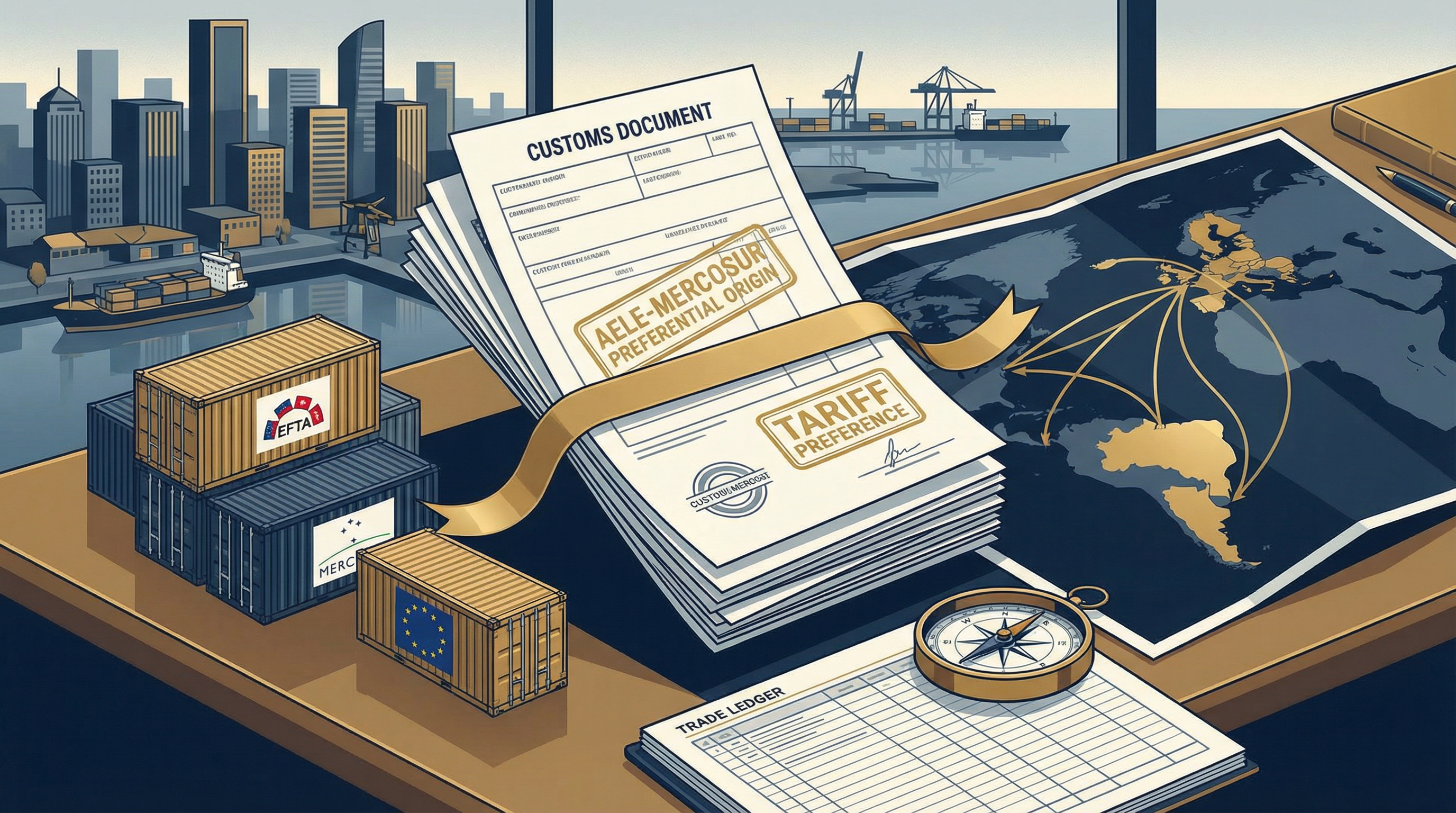
The provisional application of the trade agreement between the European Union (EU) and MERCOSUR on May 1, 2026, marked a historic turning point in international trade relations. For the very first time, European companies now have direct and competitive access to a public procurement market estimated at over €200 billion annually. This major, long-negotiated breakthrough opens up unprecedented growth prospects for companies from the old continent, across all sectors.
Before this agreement, the public procurement markets of the MERCOSUR countries (Brazil, Argentina, Uruguay, Paraguay) were notoriously difficult for foreign companies to access. Protectionist practices, local content requirements, and a lack of transparency constituted often insurmountable barriers. The EU-MERCOSUR agreement sweeps away these obstacles by guaranteeing European companies treatment no less favorable than that accorded to national companies. In concrete terms, this means that for tenders covered by the agreement, a French, German, or Spanish company will be on an equal footing with a Brazilian or Argentine one.
The agreement's chapter on public procurement is one of the most ambitious ever concluded by the EU. It covers not only central government entities but also, and this is a significant novelty, entities at the sub-central level, such as states and municipalities in the case of Brazil. This extended coverage multiplies the opportunities, given that a significant portion of public procurement is decided at the local level.

To ensure that only tenders of a certain economic importance are concerned, the agreement sets contract value thresholds above which the opening rules apply. These thresholds are aligned with those of the World Trade Organization's (WTO) Agreement on Government Procurement (GPA), ensuring consistency with international practices.
As an indication, the thresholds for supply and service contracts of central government entities are set at 130,000 Special Drawing Rights (SDRs), or approximately €144,000. For works contracts, this threshold is 5,000,000 SDRs (approximately €5.5 million). For other covered entities, such as public undertakings or local authorities, the thresholds are higher. It is crucial for companies to check the specific thresholds applicable to each tender, as they will be progressively lowered over a period of seven years after the agreement's entry into force to fully align with EU standards.
The agreement covers a wide range of sectors, offering opportunities in areas where European expertise is recognized. These include:
The bidding procedures will also be modernized and transparent. MERCOSUR contracting authorities will have to publish all their tenders on a single electronic platform, accessible online. The submission deadlines will be sufficient to allow European companies to prepare quality bids (generally a minimum of 40 days). Technical specifications will have to be based on international standards, thus avoiding specifications designed to favor local players.
To seize these new opportunities, European companies must adopt a proactive approach:
The opening of MERCOSUR's public procurement markets is much more than a simple clause in a trade agreement. It is a paradigm shift that offers European companies privileged access to a dynamic and growing market. Challenges exist, particularly in terms of competition and adaptation to local practices, but the opportunities are immense. The companies that know how to prepare and position themselves now will be the big winners of this new transatlantic trade era.
Working on a concrete case?
20 minutes to identify three opportunities and three risks related to your situation.
Confidential first exchange →Related tool
Business guide
Join professionals who follow MERCOSUR news. 1 email per week, unsubscribe in 1 click.
Regulatory monitoring, case analyses and legal insights — directly in your inbox, once a month.